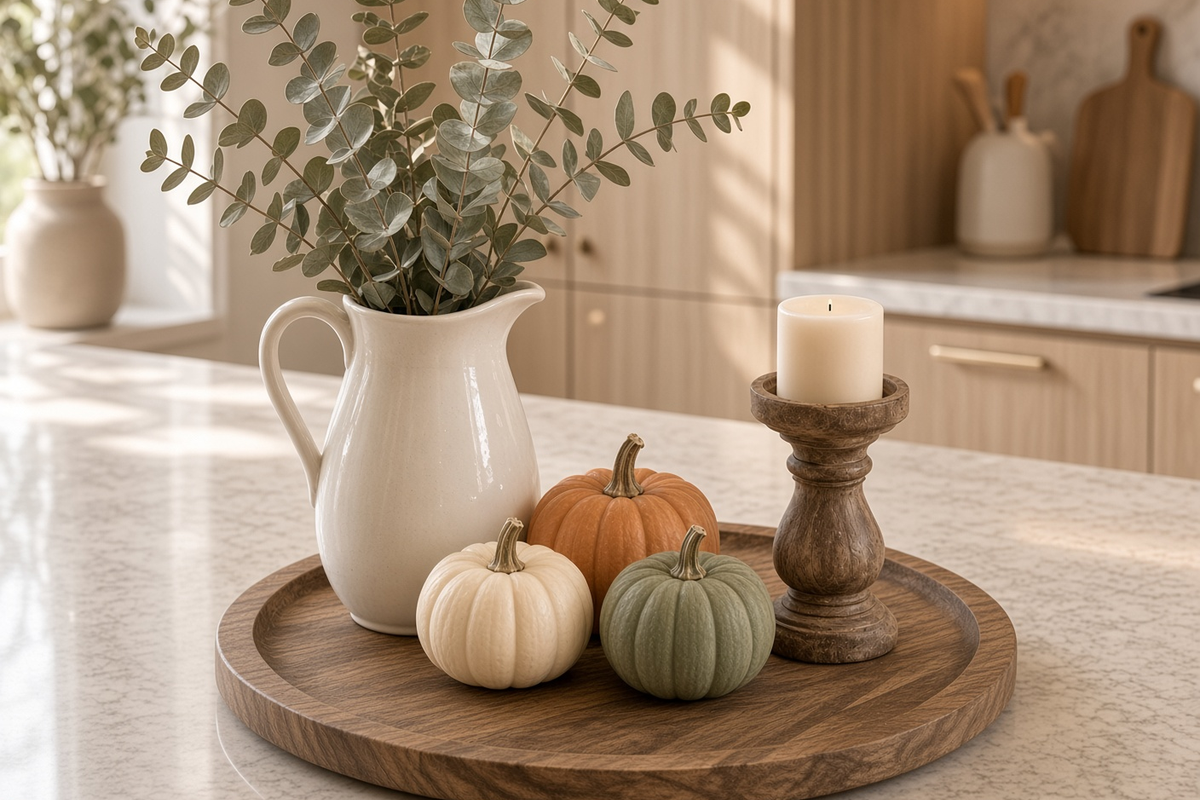
A kitchen island is one of the few surfaces in a home that has to work hard every day. It holds groceries, mail, school papers, coffee cups, and whatever else lands there. That is exactly why a tray works so well for fall decorating: it gives the seasonal arrangement a clear boundary, so the room feels styled instead of crowded.
The centerpiece in the photo works because it is simple. A white pitcher, a few mini pumpkins, dried eucalyptus, and a round wood tray create a warm fall moment without turning the kitchen into a craft store. This guide breaks down how to build the same look with pieces you already own, plus what to look for if you are shopping for a tray, pitcher, or faux stems.
Why a Tray Is the Best Starting Point
A round or oval tray does three useful things at once. It protects the countertop, gives small objects a home, and establishes a visual boundary that makes the arrangement feel intentional. On a kitchen island, a tray also makes it easier to move the entire display when you need the surface for cooking or hosting.
Choose a tray that is large enough to hold the pitcher and pumpkins without looking cramped, but not so large that it blocks the island. A good rule is to leave at least a few inches of open countertop around the tray. The wood tone should relate to your cabinets or flooring. Warm oak, walnut, and acacia work especially well with cream, sage, and muted orange.
Build the Arrangement Around One Tall Element
The white pitcher is the tallest object, which is what gives the arrangement its shape. Without a vertical element, everything reads as a low cluster and can disappear against the countertop. A pitcher, vase, small lamp, or cake stand can all serve the same purpose.
Keep the pitcher mostly neutral. White, cream, stone, or matte ceramic lets the fall colors come from the pumpkins and greenery instead of competing with them. If your kitchen already has a lot of color, choose a simple clear glass vase and add one or two stems.
Choose Eucalyptus or Another Soft, Airy Stem
Eucalyptus is popular for fall styling because its muted green color bridges summer and winter. It also adds movement without looking busy. You can use fresh stems if you enjoy replacing them, or realistic faux stems if you want the arrangement to stay put for the whole season.
Arrange the stems so they lean slightly to one side. A perfectly symmetrical arrangement can look stiff, while a slight lean gives the tray a more natural, collected feel. Three to five stems are usually enough for a small to medium pitcher.
Use Pumpkins in Odd Numbers and Mixed Sizes
Odd numbers tend to feel more natural in a small arrangement. Three pumpkins in different sizes are easier to balance than two or four. Mix one larger pumpkin with two smaller ones, and vary the colors instead of matching everything.
Cream, muted orange, sage, and soft green are the easiest colors to combine. If you prefer a more traditional fall look, use two orange pumpkins and one white pumpkin. For a neutral kitchen, start with cream and sage, then add one small orange pumpkin as the focal point.
How to Know the Scale Is Right
Stand back from the island and look at the arrangement from the same distance you would see it while walking into the room. If the tray looks tiny, add one more pumpkin or a taller pitcher. If it looks crowded, remove the smallest object first.
The arrangement should occupy roughly one-third of the island's width when viewed from the front. On a very long island, you can repeat a smaller version of the tray at the opposite end, but keep the middle clear for actual use.
Layer in Texture and Light
Fall styling feels warmer when the materials are varied. Combine smooth ceramic, natural wood, dried stems, a woven basket, or a linen runner. Texture is what makes a simple tray look collected rather than purchased in one afternoon.
A small candle or a lamp nearby adds a second layer of warmth. If you use a real candle, keep it away from the stems and never leave it burning unattended. A battery-operated candle is a practical option for households with children or pets.
Easy Seasonal Swaps
Once you have the tray and pitcher, the rest of the arrangement can change with the season:
- Early fall: mini pumpkins, eucalyptus, and a few dried wheat stems.
- Late fall: small gourds, brass candle holders, and deep burgundy leaves.
- Winter: faux cedar, white candles, and a small ceramic bowl.
- Spring: tulips or daffodils, a pale ceramic pitcher, and a small bowl of lemons.
Keeping the base pieces neutral means you only need to change one or two small items to refresh the look. That is much easier than rebuilding the entire display every season.
How to Style It on a Small Island
Small kitchens need to protect usable space. Use a narrow oval tray instead of a wide round one, and choose a pitcher that is tall rather than wide. Two mini pumpkins and one short stem cluster may be enough. If the island is your main prep space, consider placing the arrangement on a nearby shelf or windowsill and bringing the tray out only when you are not cooking.
What to Look For When Shopping
- Tray: a stable base, a slight lip, and a finish that matches the room's wood tones.
- Pitcher: a balanced handle and a wide enough opening for stems.
- Pumpkins: lightweight materials are easier to move and less likely to scratch surfaces.
- Stems: look for flexible wire or realistic shaping if you choose faux greenery.
- Candle holders: weighted bases matter more than height in a busy kitchen.
Related Ideas
If you are refreshing more than the kitchen, these guides can help you carry the same warm neutral palette through the rest of the home:
- Best coffee tables for small living rooms
- How to choose an area rug for a living room
- Storage bins that actually keep shelves organized
FAQ
Can I use real pumpkins on a kitchen island?
Yes. Place them on a tray or small mat to protect the surface, and check them every few days for moisture or soft spots.
What if my kitchen has dark cabinets?
Use a lighter tray and pitcher, then add one deeper orange or burgundy element for contrast. The same arrangement will read differently against dark cabinetry.
How often should I change the arrangement?
Once at the start of fall and once in late fall is usually enough. Fresh stems may need replacing more often, while faux stems can stay in place for the season.